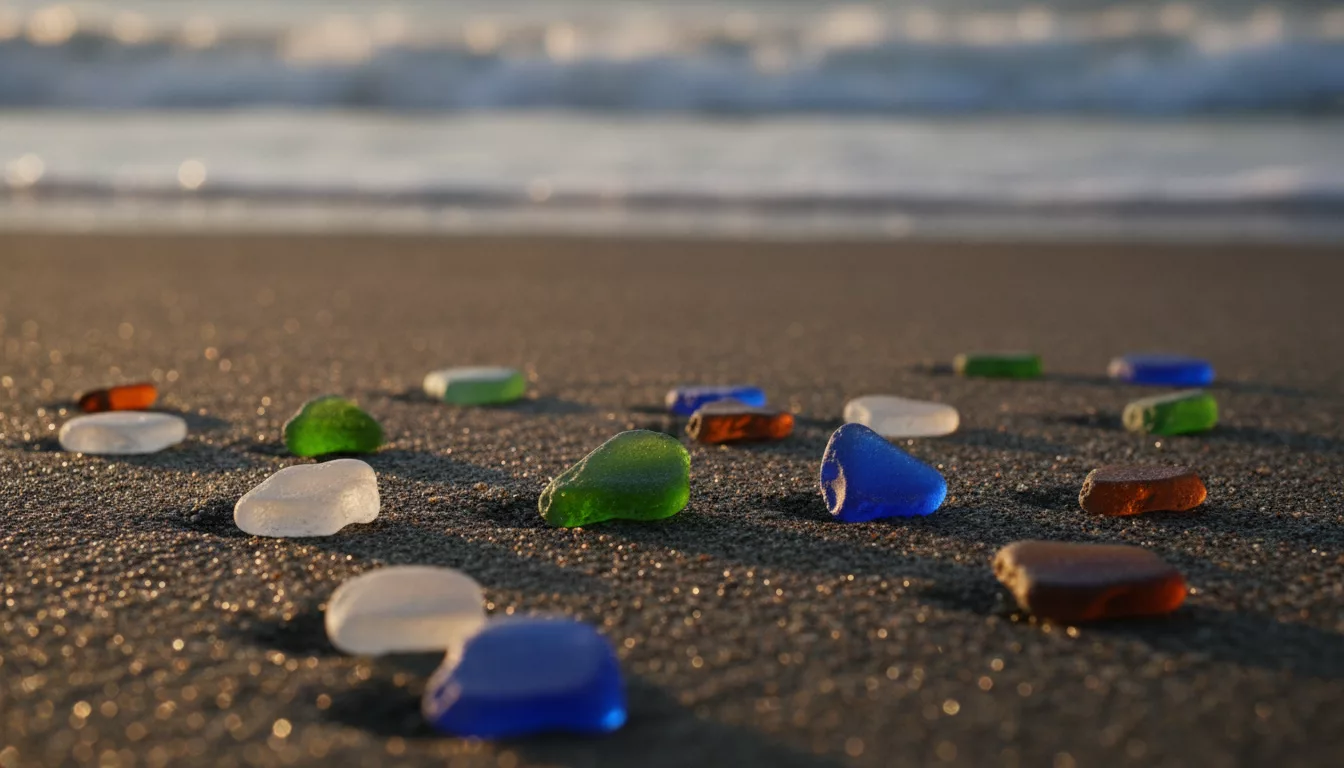
If you've ever picked up a smooth, frosted, jewel-toned pebble on a beach and wondered whether it was actually glass, you've had the classic sea glass moment. The short answer: yes, it's glass - just glass that's been through a decades-long makeover courtesy of the ocean. This guide covers what sea glass actually is, what it's made of, how the transformation happens, and why some pieces are common while others are nearly impossible to find.
What Is Sea Glass, Exactly?
Sea glass is broken glass that has been tumbled and chemically weathered by ocean water and sand over a long period of time, until it develops a soft, frosted surface and smooth, rounded edges. It starts as everyday glass - bottles, jars, tableware, window panes, even old glass fishing floats - that ended up in the water, usually because it was discarded, dumped, or lost in a shipwreck. Nothing about the glass itself is special. What makes it "sea glass" is entirely what happens to it after it goes into the ocean.
This distinguishes sea glass from other kinds of found or decorative glass. It's not manufactured to look this way, and it's not a mineral or a naturally occurring material like quartz or sea-worn stone. It's a genuinely accidental byproduct of human waste meeting decades of wave action - which is part of what makes it interesting to collectors. Every piece has a specific, if unknown, history: a bottle someone drank from, a jar that held preserves, a window that broke during a storm.
What Is Sea Glass Made Of?
Sea glass is almost always soda-lime glass, the same type used in the vast majority of bottles, jars, and glassware manufactured since the 1800s. Soda-lime glass is made primarily from silica sand, soda ash, and limestone, along with small amounts of other minerals that determine color - iron oxide for green and brown, cobalt for blue, manganese or selenium for clear glass that later turns shades of purple or amber in sunlight, and so on.
The glass entering the ocean has historically come from a handful of common sources: household bottles (beer, soda, wine, and medicine bottles account for a huge share of what collectors find), tableware and dishes, window glass, old glass fishing floats used by commercial fishermen, and industrial or factory glass waste dumped directly into the water. Beaches near 19th- and early-20th-century dump sites - places where towns pushed household trash over a seawall or into a ravine before modern sanitation existed - tend to be the richest sources, because so much glass entered the water there at once. We cover this history in more depth in our history of sea glass, including how Prohibition-era bottles and wartime glass shortages shaped the colors collectors find today.
How Does Sea Glass Form?
Two things happen to glass in the ocean at the same time, and both are necessary to produce genuine sea glass.
The first is hydration, a slow chemical process. Saltwater is mildly corrosive to glass. Over years and decades, sodium ions leach out of the glass surface and are replaced by hydrogen ions from the water, forming a microscopically thin layer of silica gel on the surface. That layer is what gives sea glass its distinctive soft, matte "frosted" look rather than a glassy shine. Hydration happens unevenly, which is why real sea glass has variable frosting across its surface rather than a uniform coating.
The second is mechanical tumbling - the physical wear from being repeatedly moved, rolled, and struck by sand and small rocks in the surf zone. This is what rounds off sharp edges and creates the pitted texture on the surface. Under magnification, that texture shows up as tiny C-shaped marks called conchoidal fractures, caused by sand grains striking the glass at different angles over years of wave action. We go into much more detail on how to spot this texture - and how it differs from machine-made craft glass - in our guide to telling real sea glass from fake.
Neither process alone is enough. Glass that's only chemically weathered (like glass sitting in still water) won't develop the rounded shape. Glass that's only mechanically tumbled (like in a rock tumbler) won't develop the same frosted surface chemistry, at least not on a human timescale. Real sea glass needs both, working together, for a very long time.
How Long Does It Take for Sea Glass to Form?
At an absolute minimum, sea glass needs 20 to 30 years of ocean exposure to develop a proper frosted surface and rounded edges. Thicker glass - old bottle bottoms, heavy jar glass, thick window panes - can take 50 years or longer. Some of the most prized pieces collectors find, particularly from 19th-century dump sites, have been tumbling for well over a hundred years.
The exact timeline depends on several factors: how energetic the surf is at a given beach, whether the sand is coarse or fine (coarser sand abrades faster), water temperature, and how often a given piece gets buried in sand versus actively exposed to wave action. A piece that spends most of its time buried a few inches under sand will weather much more slowly than one that's constantly rolling in the surf zone. This is part of why sea glass quality varies so much from beach to beach, even along the same stretch of coastline.
Where Does Sea Glass Come From?
Sea glass collects most heavily near places where a lot of glass entered the water at once, decades or centuries ago. The most productive beaches worldwide tend to fall into a few categories: former municipal dump sites where towns discarded household waste directly into the water or over a seawall before modern trash collection existed; old glass factory sites where manufacturing waste and rejected products were dumped nearby; historic ports and harbors where ships lost or discarded cargo and bottles over centuries of use; and shipwreck sites where a vessel's cargo of glassware or bottles scattered across the seafloor.
Seaham Beach in England is a textbook example - a Victorian-era bottleworks dumped glass waste directly into the sea for decades, and that same glass is still washing ashore as some of the most sought-after multicolored sea glass in the world. Fort Bragg's Glass Beach in California has a similar origin story with a former municipal dump. You can browse more examples on our sea glass locations page, which covers beaches on nearly every continent.
Sea Glass vs. Beach Glass vs. Craft Glass
These terms get used loosely, but they're not the same thing. "Sea glass" technically refers to glass tumbled by ocean water specifically. "Beach glass" is sometimes used interchangeably, but purists reserve it for glass found on freshwater shores - the Great Lakes, for example - where the tumbling process is purely mechanical without the salt-driven hydration chemistry. Freshwater beach glass tends to have lighter frosting and a slightly different feel than true sea glass, though it's every bit as natural. We break down the differences in detail, including how to tell them apart by texture and where to find each, in our sea glass vs beach glass guide.
"Craft glass" or "tumbled glass" is a different category entirely: glass that's been artificially rounded and frosted in a rock tumbler over a few days, then sold - sometimes honestly, sometimes not - as sea glass. It looks similar at a glance but lacks the irregular texture and organic shape that decades of real ocean tumbling produce. If you're trying to tell the difference between a genuine find and a manufactured one, our real vs. fake sea glass guide walks through the surface texture, shape, and edge tests collectors use.
Why Are Some Colors Rarer Than Others?
Color rarity in sea glass comes down almost entirely to how much of that color glass was produced and discarded in the first place. White (from clear glass), kelly green, and brown are extremely common because beer bottles, wine bottles, and soda bottles were manufactured and discarded in enormous volumes in those colors. Cobalt blue, aqua, and purple are less common because they came from a smaller share of household glass - medicine bottles, certain decorative glassware, Milk of Magnesia bottles.
Red, orange, and turquoise sit at the far end of the rarity scale. These colors required expensive minerals like gold or selenium to produce, so very little red or orange glass was ever manufactured for everyday use in the first place - meaning very little of it ever had the chance to become sea glass. Our sea glass color rarity chart ranks all the major colors from most to least common, and our guide to rare sea glass colors covers what makes each rare color special and where collectors have found them.
Is Sea Glass Still Being Made Today?
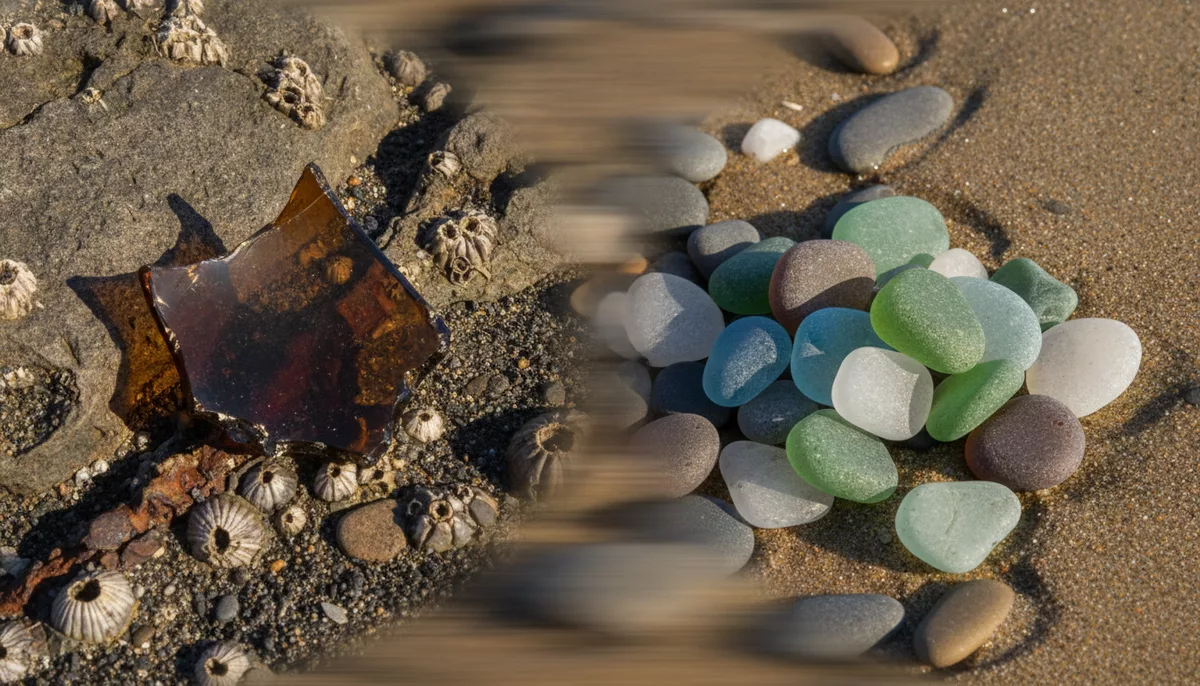
Technically yes, but at a much slower rate than in the past. Modern glass recycling programs, plastic bottle replacement, and beach cleanup efforts have all significantly reduced the amount of new glass entering the ocean compared to the early-to-mid 20th century, when household trash routinely ended up in the water. That means the sea glass being found today is largely a finite, aging supply from decades past, rather than a constantly replenishing resource. Some collectors and conservationists have raised concerns about certain heavily-hunted beaches running low on well-frosted pieces over time - we cover this in depth, including which famous beaches have already banned collecting, in is sea glass becoming rare?
Frequently Asked Questions
What is sea glass made of?
Sea glass is ordinary soda-lime glass - the same material used for bottles, jars, and old tableware - that has spent decades tumbling in the ocean. It isn't a special type of glass. It starts as broken bottles, jugs, window panes, or dinnerware, and the ocean does the rest, chemically etching the surface and physically rounding the edges until it looks nothing like its original form.
How is sea glass formed?
Sea glass forms through two processes happening at once: hydration and mechanical tumbling. Hydration is a slow chemical reaction where saltwater leaches sodium ions out of the glass surface, leaving a thin, frosted layer of silica. Mechanical tumbling is the physical part - waves and sand grind against the glass for years, rounding sharp edges and pitting the surface with tiny C-shaped fractures. Neither process alone produces true sea glass; it takes both, over a long period of time.
Where does sea glass come from?
Most sea glass comes from glass that was discarded near the shoreline decades or centuries ago - household trash dumped over seawalls before modern waste systems existed, glass factory waste, shipwrecks, and littered bottles from beach towns. Beaches near old dump sites, former glassworks, or historic ports tend to produce the most sea glass, because that's where large volumes of glass entered the water in the first place.
How long does it take for sea glass to form?
At minimum, 20 to 30 years for thinner glass like bottles, and 50 years or more for thicker glass. Some of the best-frosted pieces collectors find today are well over a century old. The exact timeline depends on wave energy, water temperature, sand coarseness, and how often the piece gets buried versus exposed to active surf.
Is sea glass rare?
It depends on the color and the beach. Common colors like white, brown, and kelly green are still fairly easy to find on active sea glass beaches. But because modern glass manufacturing and beach cleanup have both reduced how much new glass enters the ocean, well-frosted sea glass overall is getting harder to find compared to a few decades ago - and certain colors, like red, orange, and turquoise, were always rare and remain genuinely hard to come by.
Now that you know what you're looking at, the next step is finding it. Our beginner's guide to sea glass collecting covers where to look, what to bring, and how to spot quality pieces. And once you start finding your own, our free Sea Glass Collection Log tool lets you track and organize every piece you find, right in your browser - no account, no upload, nothing to install.