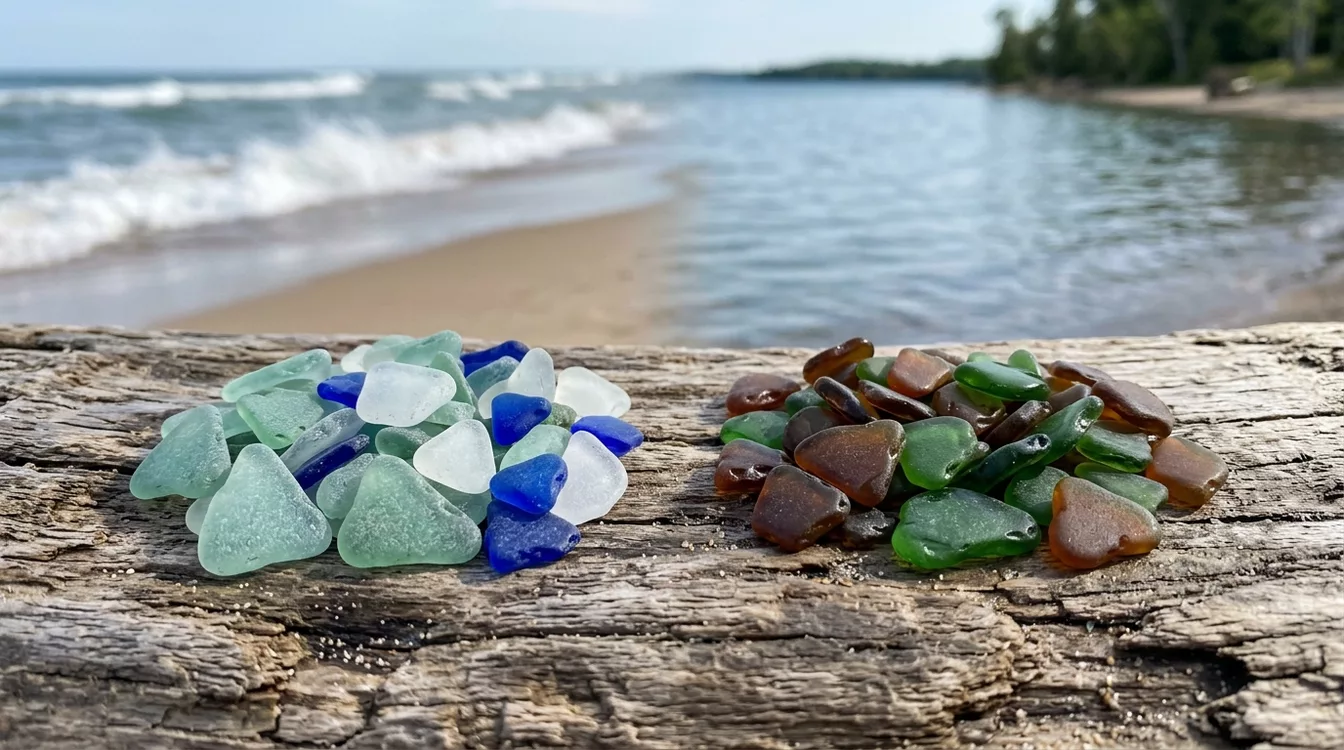
Search for "beach glass" and "sea glass" and you'll find them used as if they mean the same thing. In casual conversation they often do. But collectors, sellers and the people who write the identification guides draw a line between them, and once you know where that line sits, you start noticing it in your own finds. This guide explains what separates the two, how to tell them apart in your hand, and when the difference actually matters.
The Short Answer
Sea glass is glass that has been tumbled and weathered by salt water, meaning the ocean, a sea, or a very salty bay. Beach glass, in the narrower sense many collectors use, is glass weathered by fresh water: the shores of lakes like the Great Lakes, or along rivers. Both start out as ordinary discarded glass. Both end up rounded and frosted. The water is what changes.
There is a third thing sharing the name, and it's the one that causes the most confusion: commercial "beach glass", which is new glass that a factory tumbled or etched to look old. We'll come back to that below, because it's the version most people meet first.
If you want the underlying science of how any glass becomes frosted in the first place, our guide to what sea glass is and how it forms covers the process from broken bottle to finished piece.
Why the Water Makes a Difference
Two things turn a sharp shard into a soft frosted pebble: physical tumbling and chemical weathering. Waves roll the glass against sand and stones, which rounds the edges. Meanwhile, the water slowly leaches soluble compounds out of the glass surface, and that etched, microscopically pitted layer is what scatters light and gives the piece its matte "frost."
Salt water is generally more aggressive on both fronts. Ocean surf tends to carry more energy than a lake shore, and the chemistry of seawater works on the glass surface faster than fresh water does. That's why collectors often describe ocean glass as more deeply and evenly frosted, and why a genuinely thick, fully matte piece is usually assumed to be ocean-tumbled unless the finder says otherwise.
Fresh water can still do a lot, especially on big lakes. The Great Lakes throw real waves, and the glass that washes up along Lake Erie, Lake Michigan and Lake Ontario shorelines is a popular hobby in its own right. It just tends to frost more lightly and more slowly, so freshwater pieces more often look smooth, satiny or slightly polished rather than deeply matte.
How to Tell Them Apart in Your Hand
No single test is definitive, but a few clues stack up nicely. Start with where you found it, since that's the strongest evidence you have. After that, look at these:
Frost depth and texture. Hold the piece up in daylight. Deep, even, uniform matte all over points to long exposure to salt water. Under a jeweler's loupe or a phone macro lens, ocean glass often shows a fine pitted surface that looks a bit like orange peel, sometimes with small crescent-shaped marks. A softer, waxier, or slightly glossy surface with less pitting leans freshwater.
Edges and shape. Both can be nicely rounded. Ocean pieces that have been through decades of surf often have evenly softened edges all the way around. Freshwater pieces sometimes keep a hint of the original shape, including faint bottle lettering or molding lines, because there was less time or energy to erase them.
Color mix. This is about the source of the glass more than the water. Ocean beaches with old town dumps give you the classic mix of clear, brown, kelly green and seafoam. Great Lakes shores add their own local flavor from a long history of industrial ports, shipping and lakeside cities. Neither location guarantees any particular color, but the regional mix can be a hint when you're unsure. Our sea glass color chart shows what each color usually came from, and our guide to rare sea glass colors explains which ones are hard to find.
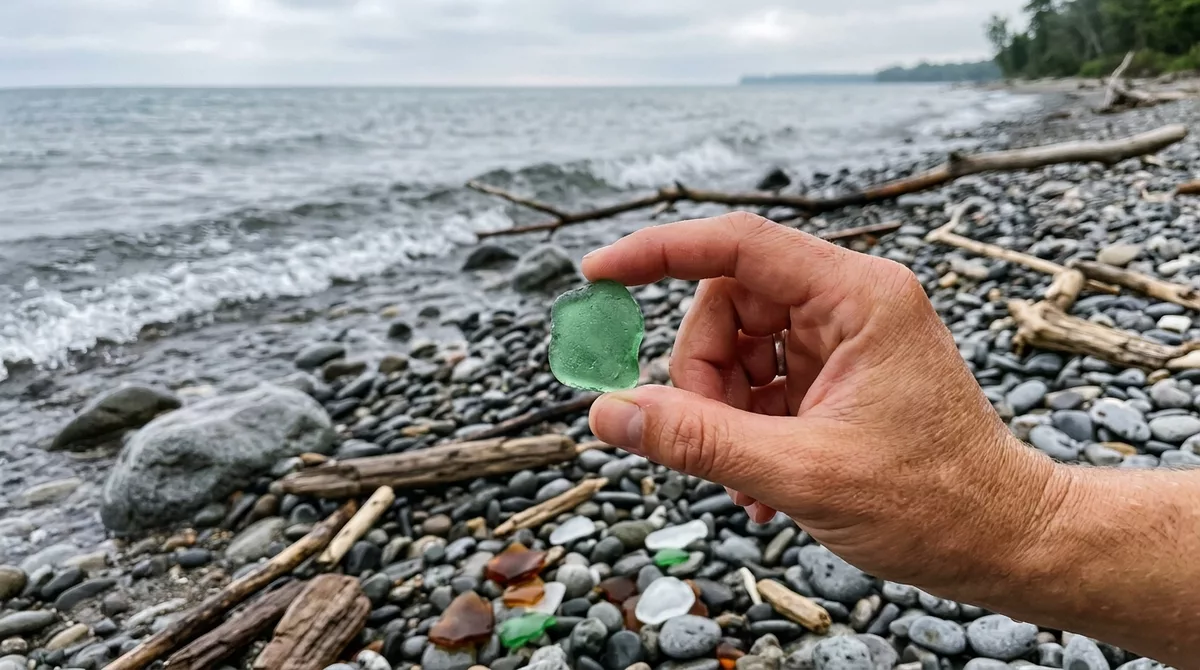
The gray zone. Bays, estuaries, tidal rivers and harbors are where the tidy rule breaks down. Water there can be brackish, meaning part salt and part fresh, and it changes with the tide and the season. Glass from these places often lands in between, with partial frosting and a mix of ocean and lake characteristics. If you found a piece somewhere like that, "genuine, naturally weathered glass" is a perfectly honest description, and most collectors won't argue about the exact label.
Where You'll Find Each One
Sea glass is what you'll find on the classic coastal destinations. Seaham Beach in England, Glass Beach in Fort Bragg, California and the beaches on our locations page are all saltwater sites where glass from old dumps and glassworks was tumbled for decades. If you're near an ocean coast, that's the hobby you're in.
Beach glass in the freshwater sense turns up along lake and river shorelines, with the Great Lakes region being the best known. Anywhere with a history of shoreline dumping, shipping, or old lakeside industry can produce it. The best hunting conditions are similar to the ocean: after strong storms or heavy wave action, when new material gets pushed up onto the shore. Our tips for hunting after storms work just as well on a lake, with one difference: check the local wave forecast instead of the tide chart.
Does the Difference Affect Value?
Somewhat, but less than you'd think. Well-frosted ocean sea glass usually commands a premium when sellers and buyers talk about "genuine sea glass," because it takes longer to form and there's less of it. Some sellers and collectors treat freshwater glass as a separate, slightly lower category, and some specialty buyers pay well for beautiful lake pieces.
The bigger price drivers are the same for both: color rarity, size, shape, thickness, and how completely the piece is frosted. A large, heavy cobalt piece from a lake will outsell a small, common clear one from the ocean every time. Our sea glass value guide walks through the grading factors and what pieces tend to sell for.
The one place where the label matters a great deal is honesty in selling. If you're listing a piece, say where it was found and what kind of water it came from. Buyers who want ocean glass and get lake glass feel misled, even though the glass is real.
The Third Kind: Commercial "Beach Glass"
Here is where most people first meet the term. Craft stores, party suppliers and online shops sell bags of "beach glass" or "sea glass" that is actually new glass, tumbled in a machine or etched in acid so it looks frosted. It's cheap, consistent, and usually a bit too perfect. The colors are uniform, the frosting is identical from piece to piece, and there's rarely any natural wear like tiny chips, pits or old lettering.
That glass is fine for vases, wedding centerpieces and kids' projects, and there's nothing wrong with using it. It just isn't the product of a beach or a lake, so it doesn't belong in the same conversation as the real thing. If you've picked up a piece and something feels off, our guide to real vs fake sea glass has a checklist you can run through at home, and it covers the relabeling tricks that cause the confusion.
What to Call Your Finds
Practical advice: use "sea glass" when you found it on an ocean or sea beach, "beach glass" or "lake glass" when it came from a freshwater shore, and just "genuine weathered glass" when you're not sure. Nobody is going to fine you for mixing the terms in casual talk. But when you record a find, note the location and water type. Our free sea glass collection log lets you track where each piece came from, which makes those decisions easy later, and turns a jar of glass into a documented collection.
Frequently Asked Questions
Is beach glass the same as sea glass?
Not strictly. Many people use the two terms interchangeably, but collectors usually reserve "sea glass" for glass tumbled in salt water and "beach glass" for glass worn smooth by freshwater lakes and rivers. Both are real, naturally weathered glass. The difference is the water that did the work, and it shows up in the surface texture, the pace of frosting, and often the color mix you find.
Is sea glass worth more than beach glass?
In most collector markets, well-frosted ocean sea glass in rare colors tends to sell for more, mainly because it takes longer to form and is harder to find in quantity. That said, value depends far more on color, size, shape and frosting than on the water body. A rare cobalt or red piece from a lake can outsell an ordinary brown piece from the ocean. Honest labeling matters more than the label itself.
How can you tell if glass came from a lake or the ocean?
The most reliable clue is where you found it. After that, look at the surface. Ocean-tumbled glass usually has a deep, even, matte frost with a finely pitted, almost orange-peel texture under a magnifier. Freshwater glass more often has a smoother, satiny or lightly frosted finish, and it can look more polished or waxy. None of these clues is foolproof on its own, especially on estuary and brackish beaches.
Does freshwater glass take longer to form?
Collectors generally report that it does, or at least that it frosts less deeply in the same amount of time. Salt water is more chemically active against the glass surface than fresh water, and ocean surf is usually more energetic than a lake shore. Big lakes with strong waves, like the Great Lakes, can still produce nicely worn pieces, but heavy frosting tends to be more typical of the ocean.
Is the beach glass sold in craft stores real?
Usually not in the natural sense. Much of the "beach glass" sold in bulk is new glass that was tumbled in a rock tumbler or acid-etched to imitate the frosted look. It can be perfectly fine for craft projects, but it is not weathered by a beach or a lake. If natural origin matters to you, ask the seller where the glass was collected, and read our guide to telling real sea glass from fake.
Whether your glass came from the surf or a lake shore, the fun is the same: the hunt, and the small surprise of turning over a piece that spent decades getting soft. Ready for your next trip? Browse our worldwide sea glass locations, or read our beginner's guide to sea glass collecting to get started.