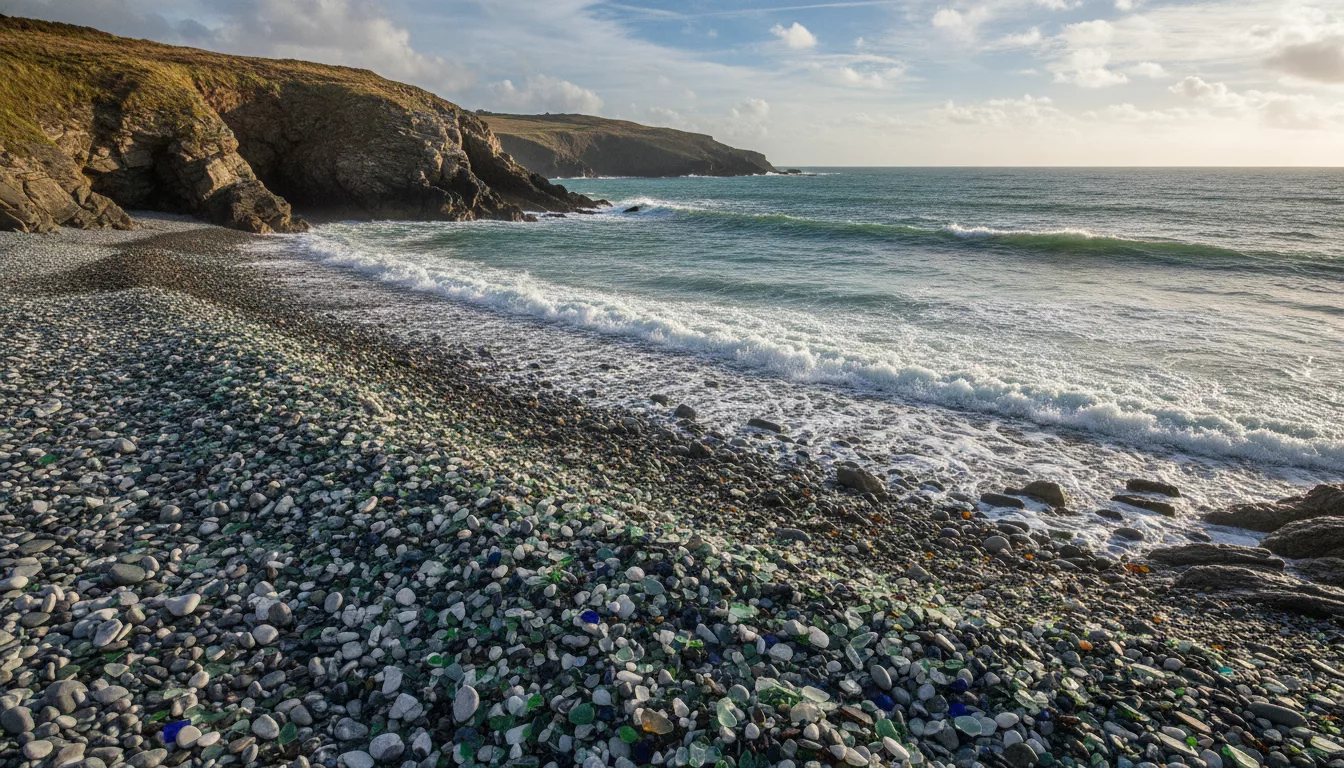
Most people visiting Wales come for the castles, the mountains, or the rugby. Sea glass collectors know something else about this country: the west coast has been quietly producing good glass for years, and most of it goes unnoticed. Cardigan Bay stretches for roughly 60 miles along the middle of Wales's Irish Sea coastline, and the beaches around Llanon and Llanrhystud - small farming villages about 10 miles south of Aberystwyth - are where collectors consistently find the best pieces.
This isn't a beach with famous history or Instagram fame. There's no dramatic backstory about a factory that dumped millions of bottles into the sea. What Cardigan Bay has instead is an honest accumulation - glass from centuries of Irish Sea shipping, from Victorian coastal communities, from small industries that operated along this coast, and from simple domestic use by generations of people who lived here long before waste collection existed. The result is a varied, often surprising collection washing ashore on shingle beaches that most tourists never visit.
The Geography of Cardigan Bay
Cardigan Bay is a large crescent-shaped embayment on the southwest coast of Wales. It runs from the Llyn Peninsula in the north down to Cardigan in the south, with Aberystwyth sitting roughly at its midpoint. The bay is relatively shallow and exposed to weather systems rolling in from the southwest Atlantic. When those storms arrive - and in Wales, they arrive regularly - wave energy builds up across the full width of the bay before breaking on the shore.
This geography matters for sea glass hunters. The fetch across Cardigan Bay means storms generate significant wave action, which turns over the seabed and shifts material on shore. The coastline between Llanon and Llanrhystud consists mostly of shingle beaches backed by low clay cliffs. Those cliffs erode constantly, and the erosion releases material that has been buried for decades or even centuries. After a good storm, you'll find freshly exposed glass on beaches that looked barren the week before.
The tidal range along this coast is moderate, typically four to five meters during spring tides. That's enough to expose a significant stretch of beach at low water that stays hidden the rest of the time - the strip of shingle just above the low tide line is consistently the most productive hunting ground.
The History Behind the Glass
Understanding where the glass came from helps explain what you're likely to find. Cardigan Bay doesn't have a single dramatic origin story like Seaham's Victorian bottle works - the glass here arrived from multiple sources over several centuries.
Irish Sea shipping lanes. The bay sits on the main shipping route between the Bristol Channel ports and the ports of northwest England, Scotland, and Ireland. For centuries, cargo vessels of all sizes crossed this water. Ships that were caught in storms and sank brought their glass cargo down with them; ships that made it through routinely threw waste overboard as standard practice. Old glass bottles, wine and spirits jars, ceramic jugs, and ships' lanterns have been washing up on these shores since the age of sail.
Victorian coastal development. Aberystwyth was developed as a resort town during the Victorian era. The opening of the Cambrian Railway in 1864 brought holidaymakers from the English Midlands, and with them came the infrastructure of Victorian seaside life: glass bottles for drinks and medicines, ceramics, and all the domestic glass that came with running hotels, boarding houses, and homes. Communities all along this coast disposed of waste in the sea or off the cliffs - the standard approach everywhere in Britain before organized refuse collection.
Local industry. Ceredigion - the county that contains most of Cardigan Bay's eastern shore - had modest but active industry during the 18th and 19th centuries. Lead and silver mining took place in the hills above the coast, and the ore was shipped out through small harbors including Aberaeron and New Quay. Mining operations used glass equipment; the harbors themselves accumulated broken cargo. Further south, the Teifi estuary saw significant shipbuilding activity. All of this contributed glass to the bay over time.
Wartime material. Like much of the Welsh coast, Cardigan Bay saw significant military activity during both World Wars. Coastal lookout posts, temporary camps, and the movement of troops and supplies all left material behind. WWII-era glass - from rations, medical supplies, and military equipment - still surfaces occasionally on these beaches.
Llanon and Llanrhystud Beaches
The two most productive beaches for sea glass hunting in this stretch of coast are directly in front of the villages of Llanon and Llanrhystud. Both villages sit on the A487, the main coastal road between Aberystwyth and Aberaeron. Access to the beaches is straightforward: small lanes lead down from the road to parking areas, and the beaches are a short walk from the car park.
Llanon Beach is the more northerly of the two. The beach here is a mix of shingle and sand, with larger pebbles concentrated at the high-water mark. The clay cliffs behind the beach have been eroding significantly in recent years - you'll see exposed sections where old domestic waste has been uncovered. This is where older material tends to emerge. After stormy weather, work the base of the cliff line as well as the usual shingle strip.
Llanrhystud Beach, about two miles south, tends to be coarser shingle all the way down. It's less sheltered than Llanon and takes the full force of southwesterly swells, which means more energetic wave action and - after storms - more fresh material deposited across the beach. The glass you find here is often better frosted from more time in the surf. The beach curves gently and has several productive pockets where the shingle banks up against rock outcrops.
Neither beach is crowded. Even in summer, you're likely to have long sections to yourself on a weekday. In the off-season, you may not see another soul. This is part of the appeal for serious collectors - the glass doesn't get picked over the way beaches near major cities do.
What You'll Find
Cardigan Bay glass is generally well-frosted, which reflects its age and the consistent wave action in the bay. The color range isn't as spectacular as Seaham or Davenport, but patient hunters find more than common colors.
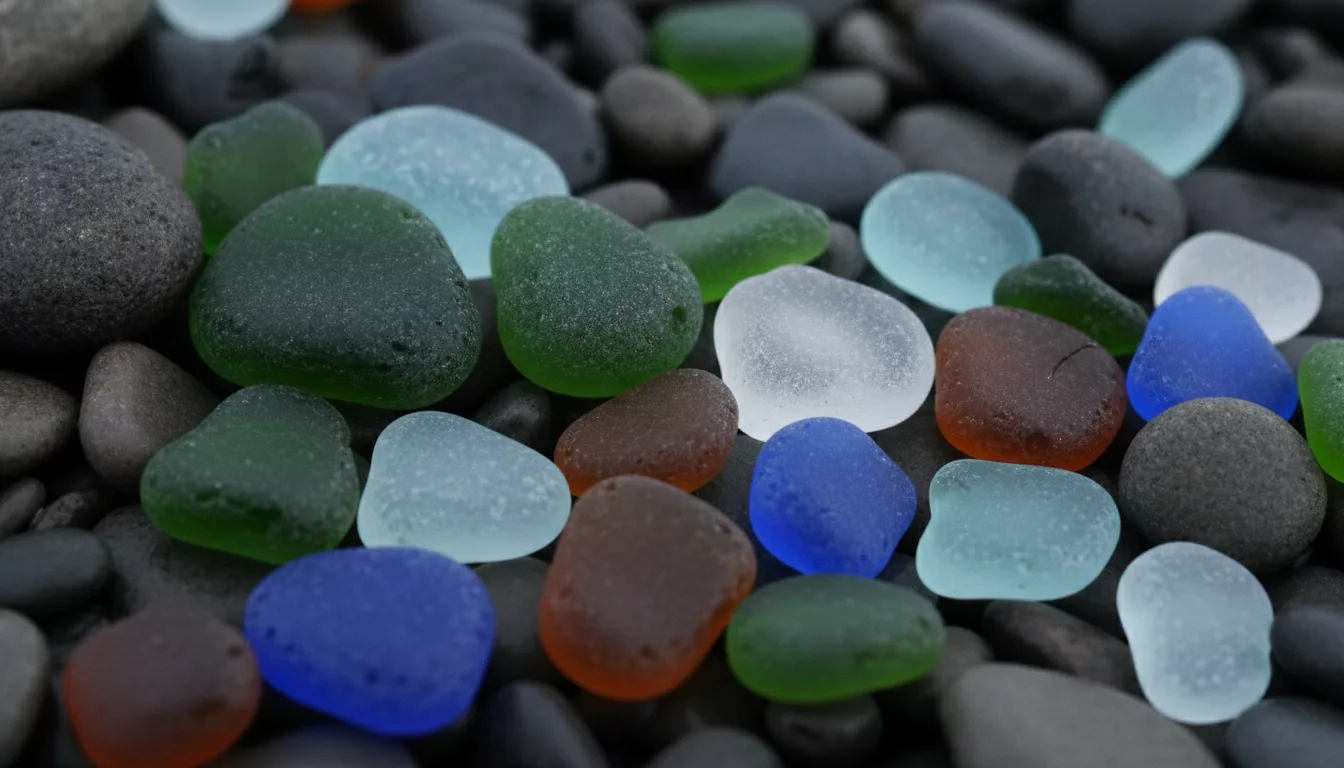
Common finds. Greens in various shades - from pale seafoam to darker bottle green - are the most abundant. Brown and amber glass is common, reflecting the generations of beer and spirits bottles that ended up in the sea. Clear/white glass is everywhere, as it is on almost any sea glass beach.
Less common but findable. Aqua and sea-foam pieces appear regularly. These often come from old medicine bottles and early 20th century glass. Cobalt blue shows up occasionally - the Irish Sea shipping route carried Milk of Magnesia and other medicines in cobalt glass that still turns up along this coast centuries later. Thick, chunky amber glass from old spirits decanters is another good find here, sometimes with heavy frosting that indicates serious age.
Rarer pieces. The old shipping and Victorian domestic sources occasionally produce surprises. Purple/amethyst glass from pre-1920s manganese glass shows up a few times a year. Pottery shards mixed in with the glass sometimes carry transfer-print patterns from 19th century English ceramics - not sea glass, but collectible in its own right. Black glass - old, very thick bottle glass that appears opaque but glows olive or yellow when held to the light - turns up occasionally and suggests material that's been in the water for two centuries or more.
The sea glass color rarity chart gives a good sense of how these colors rank against each other globally. At Cardigan Bay, expect to work through a lot of green and brown before finding the more interesting pieces - but they're there.
Best Times to Hunt
Wales's Atlantic-facing coastline gets regular storm systems from October through March. These are the most productive months, though they require preparation for cold, wet conditions. The storms generate swell that disturbs the seabed and shifts material onto the beach. The best hunting window is typically 24 to 48 hours after a storm has passed - once the sea has settled enough to walk safely but before the beach has been picked over or re-worked by the next tide.
Check the tide tables before you go. Low spring tides expose the most beach and uncover sections that are normally submerged. These low-tide exposures are where the oldest, most deeply frosted pieces tend to accumulate. The Met Office provides Welsh coastal forecasts, and the BBC weather site shows tide times for Aberystwyth, which is close enough to use as a reference for Llanon and Llanrhystud.
Early mornings are better than afternoons for two reasons. The low-tide window often falls early, and the few other collectors who work these beaches tend to arrive later. Mid-week is quieter than weekends. In summer, the beaches see some tourist foot traffic, but compared to English beaches, they remain relatively undisturbed.
Getting There
Cardigan Bay's sea glass beaches are in Ceredigion, mid-Wales. Aberystwyth is the nearest significant town, about 10 miles north.
- By car. The A487 coastal road runs directly through Llanon and Llanrhystud. From Aberystwyth, it's a 15-minute drive south. From Cardiff, the journey takes about 2.5 hours via the A470 through the Brecon Beacons and then north. From Birmingham, allow about 2.5 hours via the A458 and Welshpool.
- By train. The Cambrian Line runs through Aberystwyth, with services from Birmingham New Street (about 3 hours) and Shrewsbury (1.5 hours). From Aberystwyth, you'll need a car or taxi to reach Llanon - there's no regular bus service to the beach.
- From the north. Coming from north Wales, the A487 coastal road runs the full length of Cardigan Bay. This is a scenic but slow route - allow 2 hours from Bangor or Caernarfon.
Parking at Llanon and Llanrhystud is informal and free. There are small pull-off areas near the beach access points. Neither village has facilities like toilets or cafes at the beach itself, so bring what you need. Aberaeron, about 5 miles south, has cafes and a harbor worth visiting after a morning's hunting.
Other Cardigan Bay Beaches
While Llanon and Llanrhystud are the most consistently productive, several other spots along Cardigan Bay are worth checking on a longer trip:
Borth Beach. A long shingle and sand beach north of Aberystwyth. Exposed ancient tree stumps - the remains of a submerged prehistoric forest - appear at very low tides. Sea glass here is mixed quality, but the beach extends for miles and rarely gets picked over systematically.
New Quay. A small harbor town about 15 miles south of Aberystwyth. The harbor itself and the beaches either side of it catch material deposited by the currents running south through the bay. New Quay is also one of the better spots on this coast for bottle-spotting in the harbor walls - Victorian and Edwardian glass sometimes surfaces in the compacted beach material near the old jetty.
Llangrannog and Tresaith. Further south, approaching the Pembrokeshire border, the coastline gets more dramatic with higher cliffs and smaller cove beaches. These beaches are harder to access but see less collecting pressure. Both have shingle sections where sea glass accumulates.
Comparing Cardigan Bay to Other UK Beaches
If you're planning a UK sea glass trip, it's worth understanding where Cardigan Bay fits relative to the other options:
- Cardigan Bay vs. Seaham Beach. Seaham wins on color variety and glass quality - the Victorian factory origin produces genuinely exceptional pieces. Cardigan Bay wins on solitude and access. If you want the best glass regardless of effort, go to Seaham. If you want a quieter, less-picked hunting experience, Wales delivers.
- Cardigan Bay vs. Cornwall. Cornwall's various glass beaches get heavy tourist traffic in summer. The glass quality is similar to Cardigan Bay, but the competition for finds is higher. Off-season Cornwall is excellent; in summer, the Welsh coast is quieter.
- Cardigan Bay vs. the Scottish coast. Scotland's west coast and the Hebrides produce good sea glass in very remote settings. Quality and quantity can be excellent but requires significant travel. For anyone based in the Midlands or Wales, Cardigan Bay is far more accessible.
What to Bring
- Waterproof jacket and layers. The Welsh coast is cool and wet most of the year. Even a clear morning can turn wet quickly. A windproof outer layer is essential.
- Sturdy footwear. The shingle beaches are uneven and slippery when wet. Walking boots or wellies work better than trainers.
- A small bag or tin. For keeping finds separate from the pebbles and general beach detritus. A shallow tray is useful for sorting as you go.
- Tide table. Download the Aberystwyth tide times before you leave. You want to arrive as the tide is going out and leave before it comes back in.
- Patience. Cardigan Bay rewards systematic scanning more than lucky glances. Work slowly along the shingle line, looking for the distinctive frosted surface and rounded edges.
More Sea Glass Locations
Ready to explore more UK and European sea glass beaches? Our Seaham Beach guide covers the world-famous Victorian glass beach in County Durham - widely considered the best in Britain for rare colors. For something further afield, the Steklyashka Beach guide covers the remarkable Soviet-era glass beach near Vladivostok. Or browse the full locations list for sea glass beaches worldwide. For tips on getting the most from any beach visit, see our beginner's guide to sea glass collecting and the advice on the best times to find sea glass.